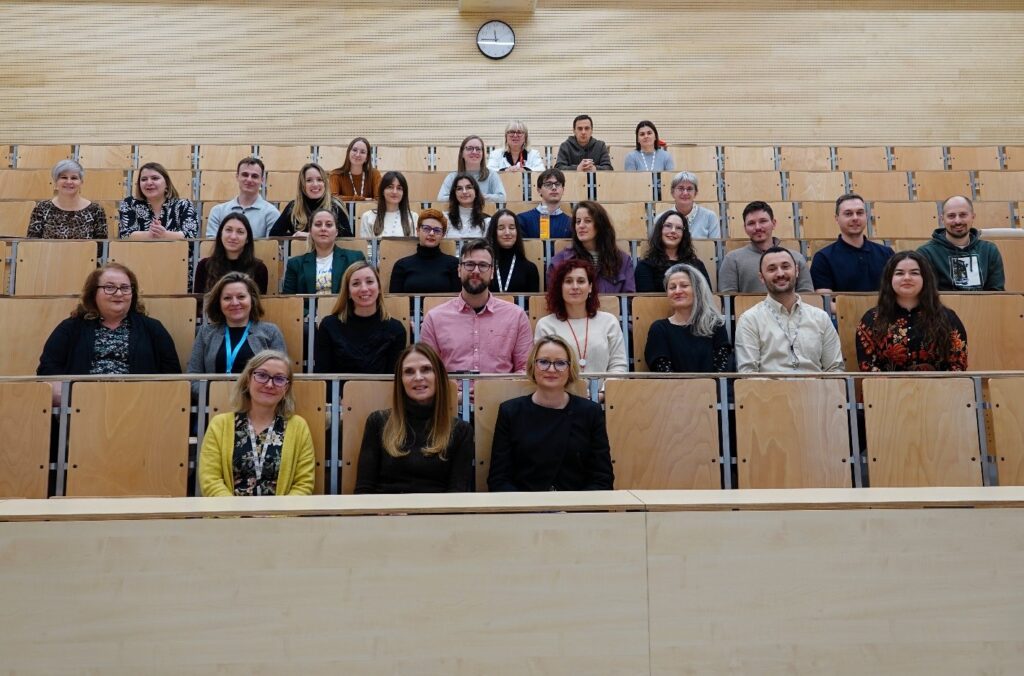
On 21 November 2025, collaborators of the BioMolTox project presented the research progress achieved to date at the Institute for Medical Research and Occupational Health during a one-day working meeting – the BioMolTox Project Day.
Across five thematic sessions, collaborators from individual work packages delivered lectures focused on the latest results of their research. The topics and progress of research aimed at investigating the effects of biologically active molecules on the nervous system were presented through four lectures addressing antidote research in organophosphate poisoning and therapies for neurodegenerative diseases. Members of the work package Development of advanced analytical methods for the characterization of biologically active molecules and assessment of their activity and toxicity using an integrated chemical–biochemical approach delivered three lectures presenting research related to endocrine disruption, the effects of propolis, and the electrochemical analysis of synthetic cannabinoids in plant samples and e-liquids. Through three lectures within the work package Development of advanced in vitro methods for the evaluation of the efficacy and safety of complex mixtures of biologically active compounds, the impact of nanoplastics on biological systems was presented. Research within the work package Membrane transporters: key proteins in the disposition, efficacy, and toxicity of biologically active substances was presented in five lectures, with an emphasis on the role of membrane transporters in biological processes. Progress of the work package Ecogenetic research in population biomonitoring, in vitro and in vivo conditions was presented through four lectures addressing the cyto- and genotoxicity of PAHs, the impact of air pollution, and the influence of human dietary habits assessed through population biomonitoring.
The meeting enabled project team members to gain a more detailed insight into the research topics and achievements of colleagues from other work packages. The exchange of knowledge and experience fostered new ideas and potential collaborations, with the aim of further improving the implementation of the BioMolTox project.